Friday, April 3, 2026
Home Blog

Exclusive Interview: Filmmaker Kira Powell Talks About Her Acclaimed Film “Best Eyes”

Meet the Mind Behind The Award Winning Film

In certain films, you can feel the care and intention of the filmmaker in each shot, and each line of dialogue that is uttered. There was no doubt when watching the acclaimed short film Best Eyes, that there was likely a deeply personal story that led to its creation. Enter Kira Powell — a writer, director, and actor who willed this film into existence. Informed by her own story, Best Eyes investigates themes like identity, belonging, and the immigrant experience.

The NAACP Award nominee focuses on a biracial teen who forms a friendship that challenges the version of herself that her mother believes will keep her safe—leading her toward self-acceptance. While the story is intimate in scale, many will find that the themes are relatable and need to be brought to the surface to invoke dialogue.

We chatted with Kira about her acclaimed short film, her inspirations, and her plans to expand Best Eyes in the future. Enjoy.


Can you tell us about your early beginnings in film and what got you into acting/directing?

Growing up, I was an extremely shy kid. I would freeze in social situations, and I dealt with major social anxiety throughout my teens. But there was always something about performing and public speaking that I loved. I know that sounds like a paradox, and I’ve tried to make sense of it myself, but I found the stage to be a safe space for expression. That freeing feeling is what led me to fall in love with acting. It was a place where I felt safe to be myself, and to be seen.

Pursuing a consistent career in acting is a challenge, so I wanted to be able to continue creating art without the approval of someone else in order to do it. With acting, it’s difficult to do that without someone greenlighting you if you’re not making your own work. So, I started writing and performing my own pieces, which led me to directing.

As an artist, being a multi-hyphenate is fulfilling to me because I can tap into and use all parts of myself. I’ve realized I’m happiest when I’m creating in more than one way, because each role lets me access a different part of who I am: my depth and vulnerability, which is great for acting; my quiet and introspective side, which is great for writing; and my level-headed, big picture thinking, which is great for directing.

“I wanted to be able to continue creating art without the approval of someone else in order to do it”


Best Eyes explores some very heavy themes around identity. Where did the spark of inspiration come from to tell this particular story?

I was going through a time in my life where I was really doing a deep dive into my childhood and my Black and Latina roots. Through acting, I uncovered a lot about myself, and I was proactively addressing a fear of being seen and where it came from. I was in therapy deepening my understanding of who I am, and how the struggles my parents faced as people of color shaped me.

In 2020, I was quarantining with my mom as she was struggling with insomnia, and I helped her heal some trauma around the root of her insomnia. I helped her to see the beauty and value within herself. As an aging immigrant Latina woman, it can be hard to hold onto your worth when society sets narrow standards of beauty and frames caregiving as your primary value.

Witnessing my mother’s identity struggles and helping her work through them began to open something up in me.  I was already thinking about my own identity and worth when the George Floyd protests erupted.  I was grappling with the tension of having experienced racism myself, while also feeling guilt about the ways I had internalized it and perpetuated it without fully realizing.

Best Eyes, which was adapted from my one-woman show Caught In the Mix, was a way to heal and make sense of that. It helped me grow empathy for my parents and explore the complexities of being mixed race and how colorism, internalized racism, and systemic racism shape our families. It’s about how these forces are passed down, and why it takes intention to interrupt them.

Indie Filmmaker Kira Powell

“I was grappling with the tension of having experienced racism myself, while also feeling guilt about the ways I had internalized it and perpetuated it without fully realizing.”


Were there any obstacles you faced as an indie filmmaker trying to get this story off the ground?

As an indie filmmaker, the list of obstacles can be endless, but there was something deep in me that said this story needed to be told. I had to move through a lot of barriers, both internal and external, including budgetary limitations, and to acknowledge the importance of expressing my voice and telling my truth.

I made Best Eyes as my thesis film in the AFI Directing program, and it was a challenging project to shepherd through the process because of the subject matter. Everyone had opinions and notes, from faculty to students, and at certain points I let other people’s feedback pull me away from my original intent. At first, I regretted being so influenced, but I eventually realized I needed to go through that journey. I was working with a talented team of individuals, including my producer Tara Austin, my co-writer Lauren Thomas, cinematographer Udit Nijhawan, production designer Disha Shah, and editor Sharon Shen. We went through so much together, and by the time we stepped on set, I felt confident about the story and what we were creating together.

There were also substantial production obstacles.  On set, we faced real-world disruptions, including one day when we had to shut down and leave for safety. It felt like one challenge after another, but despite all of it, there was so much ease and love on set that our team kept moving forward.

“As an indie filmmaker, the list of obstacles can be endless, but there was something deep in me that said this story needed to be told.”


We’ve read that the film is in feature development — congratulations! What steps did you take after the short film to get it on track to become a full feature?

Even before I made the short, I had an early draft of the feature, though the plotlines and story have evolved a lot since then. The core of what I wanted to say was always there, but going through AFI and developing the script in my feature development class helped me shape it into a stronger, more intentional feature.

After AFI, I took the next step by attaching producers who are now helping me develop the material further and package the project.


What can you share about how you plan to expand that world in the feature?

I’m expanding the characters’ stories, especially Olivia’s experience at her private school, where we see the subtle pressures around beauty standards and belonging that shape how she presents herself. We also go much deeper into Rosa’s interior life, her sacrifices, fears, and ambitions for her daughter, so her choices land with greater empathy. And in the feature, the yearbook “Best Eyes” superlative becomes a throughline that raises the stakes around how Olivia wants to be seen and who she feels she has to become to belong.

“Through acting, I uncovered a lot about myself, and I was proactively addressing a fear of being seen and where it came from.”


What is your long-term goal as an artist?

I want to continue creating and sharing stories that people connect deeply with, and to allow myself to be vulnerable so others feel permission to be open too and find healing in the work. Long-term, I want to build a body of work and a sustainable career making intimate films and series about identity, family, and the hidden emotional work people carry, while continuing to act as part of my

Camille Simone Thomas’ Play Sweet Blood Is A Must Watch

Exploring The Lives of Jamaican Maroons in The 18th Century

From the moment that Camille Simone Thomas‘ play Sweet Blood begins, the audience is immersed in 1727 Jamaica, dropped into a world of lyrical language and familial bonding — one in which the presence of slavery looms just outside of the mountains.

Within the mountains, we meet three free Afro-Taino Maroon sisters: Caona, a nurturing healer played by Whitley Armstrong, Tanama, a free and rambunctious spirit played by Amanda Hunt, and Ris, the fierce and protective older sister played by Brianna Johnson. The three actors’ chemistry is on display right away as they exchange stories, witty banter, and engage in sisterly spats in a way that feels organic and lived in.

Photo by Don Brodie

To the three actors’ credit, Tanama, Ris, and Caona are each played with equal parts strength and sensitivity. While their personalities are distinct, you believe that they’ve come from the same Baba and Bibi, as they display a shared resistance and protect each other in their own ways.

“Sweet Blood is described as being At once intimate and epic, which stands to be true.”

This bond sets the tone for the rest of the play, as the sisters navigate “Familial love, cultural commitments, lineage, and liberation.” There are all sorts of colorful characters throughout, such as Calaway Swanson’s portrayal of Cyrus, a mulatto heir to a major shipping company. Cyrus’ character was written and embodied with a rich amount of nuance, which adds another layer of depth to Sweet Blood.

Photo by Don Brodie

Director Raecine Singletary did a fantastic job creating pictures on stage, and the play kept viewers visually engaged throughout. The fighting scenes — coordinated by Luke Pearlberg — were particularly enthralling. The actors were fully committed to the intensity of these battles, enhanced by the immersive nature of JACK’s theater, and the dirt and mulch-filled scenic design of Ezekial Clare. As audience members, we were in it, ooo-ing and ahh-ing, cheering and sobbing throughout.

Sweet Blood is described as being “At once intimate and epic,” which stands to be true. Camille allows the audience to spend time with the sisters as they engage in song, share stories, and connect with generations past. Still, she makes time for world-building, which pays off in the second act, at which point the scale of Sweet Blood’s world feels massive.

Photo by Don Brodie

At times, it’s easy to forget that the play has just six actors, as it manages to flesh out characters seen and unseen, and blur the boundaries between the living and the dead. In the end, we’re left feeling just as connected to the land as the three black women who call it home.

While Sweet Blood’s run at JACK is over, we’re keeping an eye out for the play, and all involved for what they do next. Sweet Blood is a lot of things, but perhaps Camille Simone Thomas describes it best: “It is an offering, a mourning song, and a celebration: for the women who came before, for the daughters yet to come, for the possibilities of liberation that refuse to die.”

Marketing Photos by Don Brodie

A special shoutout to Amen Igbinosun, Kiará Johnson, John-Philip Faienza, and JACK for platforming such powerful work.

CAST

Adrian Lamont Caldwell Jr as Khosi
Daniel Shevlin as Joseph
Amanda Hunt as Tanama
Brianna Johnson as Ris
Whitley Armstrong as Caona
Calaway Swanson as Cyrus

__________________

CREATIVE TEAM

Produced by Camille S. Thomas, Renee Harrison & Jordan Powell
Assistant Directed by Jordan Powell
Scenic Design by Ezekial Clare
Lighting Design by Ethan Feil
Costume Design by Sam DeBell
Fight Choreography by Luke Pearlberg
Prop Design by Eric Cipriaso
Music Direction by Jhori Ahnae
Intimacy Coordination by LySaundra Janeé

Revolutionary Reads: 5 Books to Read in Honor of Assata Shakur

0

Revolutionary Reads: 5 Books to Read in Honor of Assata Shakur

I remember opening up Assata Shakur’s autobiography like it was yesterday. The year was 2016, and I was finishing up my senior year of college at Alcorn State University. Assata’s words were so fearless, so unfiltered and precise, that I tried to get anyone who would listen to read the book in the years that would follow.

My efforts were mostly unsuccessful, except for the young lady whom I was dating at the time. Assata: An Autobiography went on to become a major conversation piece in our early conversations, and the young lady — Amanda — is now my wife.

Assata Shakur remains one of the most enduring symbols of resistance, survival, and revolutionary thought in the Black liberation movement. Honoring her legacy means engaging with the stories, struggles, and triumphs of those who came before and after her.

Below are a few books that give me that same feeling that Assata’s did back in my college days. Whether you’re a student of history, a lover of memoirs, or simply looking to deepen your understanding of Black radical thought, these five books offer powerful perspectives.


1. Assata: An Autobiography by Assata Shakur

Assata ShakurNo list honoring Assata Shakur would be complete without her own groundbreaking autobiography. Assata is both a memoir of her life and a testimony of the political climate of the 1960s and 70s. Written from exile in Cuba, the book details her experiences with the Black Panther Party and the Black Liberation Army, as well as her reflections on race, gender, and justice. It remains one of the most important revolutionary texts of the 20th century, and essential reading for anyone seeking to understand her story in her own words.


2. Panther Baby: A Life of Rebellion and Reinvention by Jamal Joseph

Jamal Joseph Panther Baby

Another book that deeply shaped me. Jamal Joseph, once the youngest member of the Panther 21, provides a vivid and deeply personal account of his time with the Black Panther Party in New York. Panther Baby balances the fire of youthful rebellion with the wisdom of hindsight, offering a raw and human look at what it meant to grow up inside the revolution. His journey from prison to professor is not only inspiring but also a reminder of the resilience of those who dedicated their lives to the struggle.


3. Afeni Shakur: Evolution of a Revolutionary by Jasmine Guy

While some may know her as the mother of Tupac Shakur, Afeni Shakur was a revolutionary in her own right. In this intimate portrait, actress and writer Jasmine Guy brings Afeni’s voice to life through interviews and reflections. The book explores Afeni’s time with the Black Panther Party, her role as a mother, and her ongoing commitment to social change. A standout part of the book depicts her being a part of The Panther 21 in precise detail. Afeni Shakur: Evolution of a Revolutionary shines a light on a woman whose strength and vision helped shape generations.


4. The Autobiography of Malcolm X

One of the most widely read and influential books in American history, The Autobiography of Malcolm X continues to inspire readers around the world. Chronicling Malcolm’s transformation from street hustler to global revolutionary, the book captures the urgency of Black liberation and the power of personal reinvention. Malcolm X’s story runs parallel to Assata’s in many ways, and revisiting his words provides deeper context for the movements that shaped her.


5. The Sound of Southside by Tyrel Hunt

Okay, now hear me out. I get that adding my own novel to a bunch of revolutionary classics is a bit much, but it’s important for me to note that the aforementioned books are some of the elements that helped shape this book, this platform, and me as a whole. The Sound of Southside may focus on Jazz music, but at its core, it’s about community members standing up against an oppressive regime. In conversation with works like Assata and Panther Baby, the book’s themes extend the dialogue into the present — reminding us that the struggle continues.

What started from reading Assata Shakur’s autobiography back in college led to me being inspired enough to write my own novel. My hope is to inspire other black writers to do the same.

As Assata says in her book:

“It is our duty to fight for our freedom. It is our duty to win.

We must love each other and support each other. We have nothing to lose but our chains.”

MEET TRINIDADIAN FASHION DESIGNER AND ENTREPRENEUR WILLIAM MCINTOSH

0

HIS BRAND IS HELPING REDEFINE CARIBBEAN FASHION

Ah oneness. No gravity pulling you down, no doubt, no self-hatred. It’s the freedom you can’t articulate.” These are the words used to describe Trinidadian Fashion designer William McIntosh’s latest collection, and considering these uncertain times, it’s arrived right on time. The newly released collection “Carnival Moon” features one of a kind pieces comprised of 100% Dupioni Silk. The quality fabric, vibrant color-ways and bold patterns have become trademarks for the brand, which weaves in themes of the Caribbean with worldwide fashion as a whole. William McIntosh is a Contemporary Streetwear brand that creates a uniquely intimate  connection between designer and community. The founder and designer, who shares the same name, constructs each and every piece. We spoke to him about his early beginnings, his travels, inspirations and his one of a kind brand. Even during a busy season for his company, he was kind enough to fit us in his schedule.

LETS START WITH YOUR UPBRINGING AND EARLY INSPIRATIONS GROWING UP IN TRINIDAD. WHAT LED YOU TO GETTING INTO CUT AND SEW FASHION?

I was born in Brooklyn, New York City, however, I grew up in Trinidad and Tobago, Chaguanas, to be exact. My early inspiration growing up was Carnival, the Mas filled with color and shape, however, the diversity of fashion and lifestyle in New York City also had a great influence. Every year I would visit the big city. I would always find myself in the city, upper and lower Manhattan. I studied at the Fashion Institute of Technology but what really led me into the Cut and Sew fashion was the interest to learn. I always wanted to be better in all aspects of fashion. I feel as if Couture is the most important thing in design, something about being able to create what’s in your mind or sketch illustrations.

“All of these elements, coupled with the precise amount of Caribbean hues, color and print design help form the vision for my brand, I call it Caribbean Street Contemporary Fashion.”

CAN YOU TALK ABOUT OPENING YOUR OWN CLOTHING STORE AT 19 YEARS OLD AND HOW THAT OPENED YOUR EYES TO THE LACK OF DIVERSITY?

I opened my clothing boutique called Urban Dynasty immediately after I finished high school. Opening this boutique provided me opportunities to travel and to make purchases for my boutique in places such as Los Angeles California, New York City, and Miami. After being exposed to many different cultures on my adventure, coming back to Trinidad, I saw what was lacking in the industry and decided to capitalize on it.

WE READ THAT YOU’VE BEEN INSPIRED BY YOUR TRAVELS AND EXPOSURE TO DIFFERENT CULTURES. CAN YOU TALK TO US ABOUT WHICH CULTURES AND STYLES HAVE HELPED YOU FORM THE VISION FOR YOUR OWN BRAND.

American Street culture has definitely helped to form the vision for my brand, it’s modern and westernized, expressing massiveness in shapes and architectural expression and energy. All of these elements, coupled with the precise amount of Caribbean hues, color and print design help form the vision for my brand, I call it Caribbean Street Contemporary Fashion.

WHAT CAN YOU TELL US ABOUT YOUR NEW SHIRT LINE “CARNIVAL MOON”? LOOKS DOPE!

Carnival Moon is an emotional feeling of being weightless; zero gravity. I was shopping for fabric last year in New York and I came across this fabric store in Brooklyn on Pitkin Avenue. They had a wide selection of mixed fabrics and trims, which piqued my interest, so I decided to walk in. Whilst exploring this store, I noted this array of vibrant colors which reminded me of Carnival Mas on the streets of Trinidad and Tobago, a culture which captivates your heart. I was truly intrigued.Colors and Carnival:  It is like floating around in bliss, being in sync, vibrating with life. “Ah oneness”, no gravity pulling you down, no doubt, no self-hatred. It’s the freedom you can’t articulate.This collection of shirts was designed by @dw_mcintosh, it was sewn in Brooklyn in the Summer of 2019.

“I feel as if Couture is the most important thing in design, something about being able to create what’s in your mind or sketch illustrations. “

LAST QUESTION. WHAT ARE YOUR GOALS FOR YOU AND YOUR BRAND GOING FORWARD?

 My goals and the goals for my brand would be to continue to learn and grow as a fashion designer. It certainly would be nice to do an international collaboration with Doctor Martens or Vans sometime this year. Why these brands you may ask? Well, I surely believe that I can offer them a new, yet young and trendy perspective of street footwear.

Check out this visual story from one of Paris’ rising talents

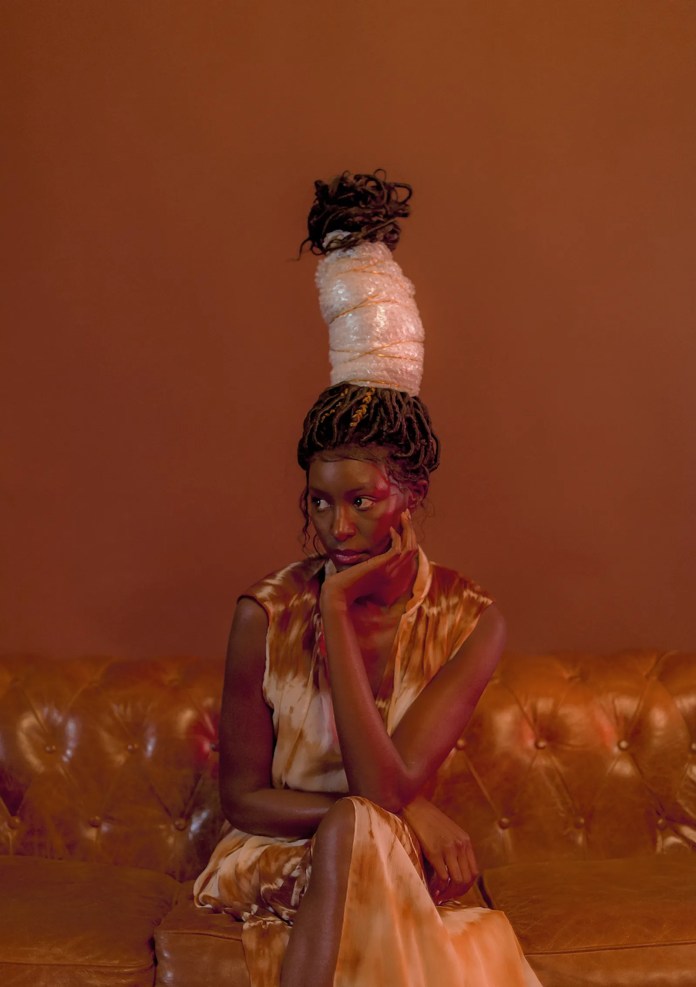
Afrogile is a must-see project

The team at Gritty Vibes is delighted a present a new visual story entitled “Afrogile”, created by Parisian Artistic Director & photographer Bamby Diagne. Originally from Dakar in Senegal, Bamby Diagne is a multidisciplinary artist who progressed to photography and video after initially starting out in graphic design during his course in artistic direction at the Internet and Multimedia Institute. He fell in love with photography through urban exploration and has carved out a distinct aesthetic to call his own. Read below for Bamby’s description of this project, and scroll through the gallery to take in this impactful work.


Artist Statement: “Up until now, the black body has been just as hindered as it has been admired. In that wide spectrum of emotions and ambivalence its sight arouses, “Afrogile” highlights a precise characteristic of that body, which is also struck by numerous limits. It is on the basis of this observation that the project was created.


The name stems from a wordplay between “Afro”, “Agility” and “Fragility”; keywords that sums up the genesis of the project in the most efficient way. Indeed, African hairstyles are, still nowadays, perceived as “extra” or “fanciful”. Very poorly appreciated in the professional world, it is still complicated for black women, to be able to wear those hairstyles freely, in all circumstances, even keeping in mind that they are more fitted to their natural hair texture.


The visual concept of Afrogile revolves around the repurposing of elements such as bubble wrap, plastic wrap or protective foam, initially used for the protection and transportation of objects, and transform them into accessories for these various hairstyles. It was also really important for the team, during the creative process, to mold a project filled with optimism. Agility is one of the strength of Africain hair. Its multiple possibilities, its extreme malleability are qualities not to neglect in a society that still struggles to accept it in its entirety. Identity is also something to reaffirm by the way we style our hair and it is one of the aspects “Afrogile” aimed to put forward. These women convey their aura through their hairstyles. This uniqueness and diversity has to be accepted, celebrated and protected.

Learn More Here:

Afrogile by Bamby Diagne


Official credits: TEAM A.D / PHOTOGRAPHY Bamby DIAGNE

HAIRSTYLISM Shenna ROCHAS
PROPS MASTER Aurore JORGENSEN
PHOTOGRAPHIC ASSISTANTS Erwan DESMAZON/Suzanne ELORGA
MUA Oldie MBANILIGHTING ASSISTANTS David MARTELOT / Nayel RACHEDI
STYLIST Babacar TALL
MODELS Aissata TCHAKO Esther GOMIS Marlène AHODETOR Shalom Eden ABOSSAN Djeinaba CAMARA

Behind the Lens: Meet visionary Photographer K. Visual

The skilled shooter is on the rise

During April in NYC, a recent yet highly anticipated tradition takes place amongst the local creative community. K. Visual Open Studio Day for many, is an opportunity to work with one of NYC’s most brilliant photographers in an invite only setting in Long Island City. For Karl Jean Baptise, this day is not only a chance to work creatively, it’s a reminder of when all of this began. Karl recalls the day with precision: April 1st, 2015 was his first official day in his photography journey. Hundreds of influential shots later, it’s pretty clear that he’s been headed in the right direction ever since.


K. Visual approaches his craft without boundaries, and his body of work — which includes Portrait Photography, Concert, Streetstyle and more — is proof of that. His work in Portrait Photography stands out to us especially. By now the style is his signature: There’s the constant presence of vibrant colors, either via the backdrop, his muses, or at times both. There’s the pristine quality, and of course, there’s a visual comfortability with each of the subjects that he showcases. K. Visual understands that an important yet underrated element of photography is relationships, and the work that he does to make his models and muses feel at home is evident in his shots.Ahead of this year’s K. Visual Day, we got to speak to the mind behind the movement to learn more about how it all began. We talked about his journey, his creative process, his approach to his signature Portrait Photography style and more. We’re going to be on the lookout for what comes from his brand and his camera going forward. If you like what you see below, you definitely should too.


1. It’s always great to feature a fellow NY representer on this platform. Let’s start from the beginning: What was life like for you as a youth? Would you say you came up in an environment that helped nurture your creativity?

As a youth bouncing between Long Island and NYC, it was a constant push or pull between the norms and the outliers. Being a child of divorced parents was a blessing in disguise creatively as I was exposed to a lot more at a younger age. Weekdays on Long Island and weekends in Queens/Brooklyn someway, somehow balanced themselves out plus or minus the longevity in time I’ve spent in either or. Being around inner-city neighborhoods with youth that had no issue in expressing themselves creatively provided great influence on how I would step forward into Art let alone photography. That along with the early 2010s music and fashion that MTV and BET used to play all day was of great influence. It became evident to me from young not to let my various environments define me. Thinking global and not local became a staple mindset for me from young.


portait photographer


2. When did you pick up the camera? What was it exactly that made you know that photography was something you wanted to stick with?

From youth, I would make a habit out of using my family’s point and shoots as my own personal cameras although those times would be short lived. Officially, Wednesday, April 1st, 2015, which is also known as K. Visual Day was the first day of my photography journey. I have a profound appreciation for memories and cementing legacies. While videos show motion, I prefer stills more. I photograph nouns: people, places and things. While there’s no definitive number put on a human life, they only last but so long while photographs last forever. I believe that aside from my own personal purpose, photography is part of my purpose. Being able to help someone further advance their artistic journey and or aiding others in capturing photographic evidence of their lifetime is the greatest fulfillment to me.

“I look for opulence in one’s individual features, distinctive differences that you probably would not see in your typical person”


3. How would you describe your style of photography? What would you say defines a shot from Karl Jean Baptiste?

My style of photography is pictorial and dynamic. My photography can give you the resemblance of a photo you might see on the front cover of a magazine or a photo that belongs in an assortment of certain photos depending on the concept. You will almost always find a strong focus on crisp-clean quality on my photos. You can blame my brother B. Rambo for schooling me on photo quality early on in my photographic career. My photos are the photos that you wake up on Sunday morning and just awe in amazement. Colours. You will always find an array of rich colors on my photos as no photo that is dull ever gets released from me. I photograph a lot of portraits of individuals so you’ll also see my focus on the features that make each and every individual that I photograph unique and beautiful.


4. We see you were looking for muses and models to collab with. As a photographer, what traits do you look for in a potential collaborator?

When I am scouting a model or a muse, I look for opulence in one’s individual features, distinctive differences that you probably would not see in your typical person, and lastly their persona. It is effortless to deem someone pleasing to the eye but it takes on a different meaning when it comes to how they look against a camera, my camera for that matter. I ensure that the person I am collaborator shares a devout interest in creating everlasting images and has a profound appreciation for art as a whole before I move forward in engaging in a photoshoot. I personally can not fake the funk, if the connection is there, it’s there but if not, the shoot will likely not see the light of day, if it even still happens that is. The photographer-model/muse connection is like a chef with his kitchen. Once the chef has the proper tools and ingredients, he’s good to go in creating a great meal just as I’m ready to create great photos with a set model/muse.

“I remind my model/muses of the beauty and integrity that they possess from the moment the shoot starts.”


5. Out of all the shoots and models you’ve worked with, what’s been your favorite moment on set?

My favorite moment on set came from a shoot I executed in LA with my brother Ryan ‘Rhydizel’ Butler which resulted in my first magazine publication. We were in Hollywood Hills overlooking the city near one of Kanye West’s former properties.  Overlooking the city of LA, in that moment caused a lot of things to come full circle for me in realizing how far I’ve come and how far I’ve yet to go. Initially, we were executing a mutual collaborative effort which eventually led to the magazine publication. We went on to doing the shoot and it eventually was published later that Summer. That’s a moment that will forever be engraved in my photography journey memory and has just empowered me to do better and be better photographically and as an artist overall.


6. One of the most underrated parts about photography is making your subject feel comfortable. How do you manage to achieve that?

Both the photographer and the model/muse have a job to do and more importantly, they complement one another. A model’s success is contingent upon not only their physical but their social and mental as well. I make it a point to get to know the individuals that I work with. It is also important to me that I hone in on their likes, dislikes, their securities and more importantly, their insecurities. It is essential that the individuals that I work with are confident and comfortable within their own skin let alone in front of my camera. I remind my model/muses of the beauty and integrity that they possess from the moment the shoot starts. Photographers are strong within their cameras whereas models are strong within their image. There isn’t a shoot that I’ve published where the model does not have the full support of myself and the full confidence within their own self. Sometimes, photographs teach people more about themselves than other people do.

“I have a profound appreciation for memories and cementing legacies”


7. For those who are interested in working with you, what’s the best way to connect and get in touch with you?

The best way to contact me is via DM @karljeanb or my email : karljeanb@gmail.com. I’m a people person so I have a 24/7 Open Door policy. I’ve had people inquire about a shoot at 2 in the morning before so yeah, DM or email. Just don’t call me off of Instagram, I believe that’s a little weird especially if we’re not acquainted.


8. Last question: You told us you’re aspiring to take your photography to the next level, what does that level look like for you?

The next level in photography includes a multitude of things. I want to put out images that would give anyone who lays eyes on them a wow factor. The next level also includes expanding my concert photography as well as my editorial and beauty photography. Working with new individuals who share identical artistic visions as myself and working with individuals who are aiming for the moon. I look around at those who are in my same line of work and realize that some of those high echelon positions that they may be in, I should be in. One shot at a time, like Maya Angelou once said, like dust, K. Visual will rise.


For more dope content, including filmmakers, street photography, portrait photography and more, read on.

Meet the Dancer and Scoliosis advocate who is changing lives

0

Paige Fraser is fulfilling her purpose.

Paige Fraser’s story as a dancer would already be impressive enough. The BX Native is a cerebral talent, disciplined in a diverse array of styles which have contributed to her being considered one of the 25 To Watch by Dance Magazine. Her ability in the artform is only a part of her story though. As a kid, Fraser was met with the news that she has Scoliosis, a spinal condition that could potentially put a promising dancing career like hers in jeopardy. The diagnosis would prove to be just fuel to Fraser’s fire though, and an opportunity for her to light the way for so many others behind her. Now the leader of her own foundation, Paige Fraser is using dance to create opportunities and change lives. We caught up to her just as she was wrapping up some dance instruction in Haiti and she was gracious enough to tell us her story.


1. Can you describe your experience as a professional dancer? How did you get into the art form and what’s been some of your favorite experiences?

I started dance when I was 4 years old. It began as a hobby. My mom put me into dance because I loved music. At the age of 10 I realized I had fallen in love with dance. I was granted the opportunity to dance the lead role of Clara in the Nutcracker. As a dancer of color that was a big deal, especially at a Ballet studio. From that point on I saw that so many people believed in me. I worked even harder during the year and was accepted into various summer intensives.

Dance quickly became my life, after school. I continued training in high school, at the Professional Performing Arts School/Ailey School where I was introduced to Modern, Jazz, and African. I loved the various styles. I was accepted into Fordham University/Ailey where I continued my dance training. My junior year I was offered an apprenticeship with Ailey 2 (the second company to Alvin Ailey) and by my senior year I was offered the job. It is actually quite funny, I was on tour with Ailey 2 when my classmates were walking down the aisle, so I wore my cap and gown the same day and took a picture while on tour in Germany.

Following this incredible experience I found myself in a place of transition. I had completed my two years with Ailey 2 and needed a job. It was a humbling time for me because I signed up for two intensives where I was one of the oldest in the room. I knew I wanted to keep training until I got a job. I had heard about a new contemporary company that was starting in Chicago and I submitted my information. After a few emails back and fourth with the director and a video submissions I was offered the job. It was a huge leap of faith for me, leaving NY to join a new company but I trusted God and knew that I would be a funding dancer of company!

Since being here many doors have opened. I was hired to share my story in an INTEL commercial. I won a Princess Grace Award for Dance (which is a very prestigious award given to few artists each year), I was named Dance Magazine Top 25 to Watch and “20 in their 20’s” by Fordham University. I am very blessed for the career I have had and it keeps me motivated and hungry to do more.


2. For those that don’t know, can you speak on Scoliosis and the origins of your advocacy for the cause?

When I was 13 I was diagnosed with Scoliosis. Scoliosis is a curvature of the spine that can affect breathing as well as impairing the heart and lungs. It is more common in women. Doctors immediately told me that I would need surgery because it would only get worse. Hearing all of this and seeing the x-ray of my spine was terrifying. My parents knew I wanted to be a professional dancer and knew that the surgery would be extremely intrusive. We sought alternative advice and found a chiropractor in the city that helped to stabilize my spine. I was also given two corrective back braces that I wore to school and to bed.

“Our mission is simple; to create a safe space for those dealing with or without challenges to reach their full potential.”

This was a tough time for me because I had to figure out my body and learn how to stand and walk differently. One thing that kept me together was dance. I studied my posture and worked on my core strength. Fourteen years later I am still living and dealing with Scoliosis. I am very happy that I did not need to get the surgery. I recently have started taking a Floorbarre class that is similar to Pilates and Yoga. It is a therapeutic way for me to connect with my body and find proper alignment. Some days are better than others, but the work never stops. Dance is healing.


3. Congrats on launching your foundation. Can you speak on what you aim to do for the community with it?

Thank you so much, it is a very exciting time for me! The Paige Fraser Foundation was founded because of my desire to give back to the next generation, especially those from the Bronx because I have such a strong connection to where I’m from. Our mission is simple; to create a safe space for those dealing with or without challenges to reach their full potential. We are starting small and offering a series of pop up workshops for Yoga, Dance Cardio, and Meditation. All information can be accessed on thepaigefraserfoundation.org We are also looking for grant writers and are accepting submissions on our website.

“I believe that everything will unfold as it should in life. I’m learning to let go more and let God.”


4. What’s been the most challenging part about starting up your own movement?

The hardest part of having my own foundation is agreeing on decisions with the board. I have so many ideas but I am often put in check. We are still so new and need to take baby steps to be most productive.


5. What do you have in store for the future? What are your dreams/aspirations for the future?

Honestly I don’t know what is next for Paige. I have accomplished so many of my dreams and I right now I just want to continue to work hard, stay healthy, remain humble, and travel. I believe that everything will unfold as it should in life. I’m learning to let go more and let God. It is the best way to live.

Instagram – @lovingthispaige

THE FUTURISTIC SCI-FI COMIC “TUSKEEGE HEIRS” IS A MUST READ

0

THE COMIC SERIES GIVES US NEW, YOUNG HEROES

Giant robots. Villains bent on destroying civilization.Tuskegee Heirs” has everything we’d like to see in a comic series but the best part about it is, within the characters we see ourselves. The futuristic sci-fi action-adventure comic book series is set 80 years in the future, following a squadron of young, gifted aviators, who are forced to become Earth’s last line of defense against a menacing race of artificially intelligent villains. It is the brainchild of illustrator/writer, Marcus Williams and Writer/editor Greg Burnham. The two created it with the intention of exposing more of this generation’s youth to the history of aviation. And yes, in case you haven’t already guessed, the comic pays homage to the iconic Tuskegee Airmen.

Marcus Williams already had a long and storied career as an illustrator for names like Cartoon Network by the time he’d thought up a rough concept of Tuskegee Heirs. Still, he noticed a void in stories that resonates with the youth like Voltron did when he was coming up. The idea was brought to professional writer Greg Burnham, and the two debated and argued their way into the concept that we know and love today.

While the story makes valuable references to the Tuskeege Airmen throughout, it brings forth a set of young heroes to its universe. The comic has four issues out, all available on the official Tuskegee Heir website. The team intends on continuing to push the story towards an animated series or movie. We’re looking forward to see how this story unfolds for the Tuskegee heirs. Wherever it goes, we’re definitely along for the flight.

MEET THE NEWEST ART COLLECTIVE OUT OF KINGSTON, JAMAICA

THE JAMAICAN PHOTOGRAPHY PLATFORM IS CREATING GREAT CONTENT

Whether we’re talking, fashion, music, art or sports, it’s quite clear that the island of Jamaica’s impact on culture as a whole is inescapable. Deep in the heart of Kingston, a Jamaican photography collective is channeling that energy and remixing it with other inspirations to create a movement of their own. The RAAS Collective was conceived from an all star team of creatives who each share a love for photography, art and 70’s era culture. While they’re still in the early stages, the group’s eye for conceptual shoots and visual aesthetics already have us hyped for what’s next.As The RAAS Collective showcases Caribbean talent in an entertaining and educational way, we’re gonna keep our eye on them and their magazine going forward. We reached out to learn more about them and the Jamaican art scene and they let us know what’s what below.

1. CAN YOU TELL US ABOUT HOW THE RAAS COLLECTIVE CAME TOGETHER? WHO ARE THE CREATORS AND WHAT WERE SOME OF THE FOUNDING THEMES THAT YOU GUYS CONNECTED WITH?

The RAAS Collective (TRC) is directed by three Kingston based creatives who are also good friends. TRC came out of the notion to change the conversation about content creation and curation in Jamaica and the Caribbean. We do this while stimulating and inspiring our audience with visual set pieces that aim to push boundaries in digital media. Creative lead Jordan Morris is a cinematographer and photographer who focuses his direction in fashion & style. His work can be seen from music videos such as reggae artist Protoje’s “Same So” to independent shoots like “Invictus” (attached) and “Miami Vice”(attached). Design lead comes from Jodian Gordon, a final year photography student at the Edna Manley College of the Visual & Performing Arts, with great interest in fashion styling, interior and set design. Marketing is led by Howard Coxe, a graduate from the University of The West Indies (Mona) with a focus in fashion consumer psychology and manufacturing design elements. TRC incorporates like-minded creatives around us in the process to bring the visions to life. Our collaborative projects aim for every person involved to gain the most creatively from the experience. To start we were simply inspired by the 70s era as many of us might appreciate. Because of its relevance in modern culture and general popularity, we believed the theme would resonate with our audience. The challenge is to portray the concepts with a new lens that can be appreciated by a global consumer. Our collective love for music and appreciation of the past (not just the 70s) invoked feelings of inspiration and motivation for our audience to see the world from our perspectives i.e. our lens.

“Whether it be in music, photography, or fashion, Kingston and Jamaica at large doesn’t suffer from a lack of artistic aptitude. “

2. WHAT’S THE ART SCENE LIKE IN KINGSTON, JAMAICA? WHAT PARALLELS DO YOU FIND IN JAMAICAN CULTURE WITH OTHER CULTURES/SUBCULTURES AROUND THE WORLD?

It’s amazing to see so much talent around us and have the opportunity to work with these persons. Whether it be in music, photography, or fashion, Kingston and Jamaica at large doesn’t suffer from a lack of artistic aptitude. Kingston hosts a wide range of artistic events that creatives can gather to network and have constructive conversations as well as to enjoy the product of each other’s creativity. These events are the precious grounds on which artistic collaborations are born. The difficulty arises for these artists with marketing their work on a global level. Although we have a local and regional market, it’s not as matured as other international spaces that have built these industries over hundreds of years. As a result local creatives are carving their own paths by making names for themselves and collaborating with each other to uplift the standard of this developing creative industry.

“In changing the conversation on this industry locally, we want to challenge persons to see differently and think differently.”

3. WHAT DREW YOU TO THE 70S ERA SPECIFICALLY? LOVE THE INITIAL IMAGES YOU GUYS PUT OUT.

Appreciate the love for the concept! A large driving force was the music of the era. Globally, a music revolution was happening where we saw a rise of funk, disco, jazz, fusion, dancehall, soul, rock & roll, and reggae genres. Interestingly most of these lasted throughout the subsequent decades and is engrained in the compositions of modern pop structures. We experienced the music of artists and bands like, Jimi Hendrix, Bob Marley & the Wailers, Peter Tosh, The Rolling Stones, AC/DC, Michael Jackson, and John Lennon just to name a few. Countless artists and groups have drawn and continue to find inspiration from this era and these artists.

4. IDEALLY, WHERE DO YOU GUYS SEE THE RAAS COLLECTIVE IN THE NEXT 5-7 YEARS?

Our goal is to produce and distribute informative entertainment around fashion & music. You can look for a build out of video series, and photography concepts around these topics going into the future. Looking 5-7 years, we hope to have established a relevant media house with audience appeal to brands ‘with something to say’. In changing the conversation on this industry locally, we want to challenge persons to see differently and think differently. The RAAS Collective not only wishes to entertain but also educate its audience. Shedding light on various cultures and subcultures, and hopefully reducing its barriers.

MEET THE LONDON BASED ARTIST OKOBÉ

THE VISUAL ARTIST IS BEHIND A NUMBER OF SUPERB SHOTS

If there’s anything we picked up on quickly during this interview, it’s that the visual artist known as OKOBÉ trusts in his vision. Whether that means hopping on a plane and moving to West Africa to make a film or capturing an awe inspiring shot, he does not overthink, he picks up his camera and gets it done. Perhaps it’s this instinctive way of creating that’s landed his film in over 15 film festivals worldwide, and his photography recognized as one of the twelve best portraits of the year by the World Photo Organization. We chatted with the Barcelona born, London based artist about his process, his background, and his future plans.

1. FIRST OFF, YOUR WORK IS STUNNING, MAN. WHAT IS YOUR BACKGROUND IN VISUAL ARTS? WERE YOU FORMALLY TRAINED OR SELF TAUGHT?

Thanks a lot. I have no background in visual arts, just a need to express myself. I started two years ago with my photography and four years ago, I did my first movie. I have never studied but as I said, art can come through technique or thought, your soul and a real need to express your own vision. I guess mine has started with the second one, and I have learned my technique observing my subjects.

2. YOUR FILM ‘GALSEN. THE LANGUAGE OF SOULS’ LOOKS GREAT. WHAT INSPIRED YOU TO TELL THAT STORY IN PARTICULAR?

What inspired me was the need to tell my story and my own vision of my reality being able to project my music and also other people’s music to create that piece of art.

3. YOU SERVED AS THE COMPOSER, DIRECTOR, WRITER AND PRODUCER ON THE FILM. WAS IT DIFFICULT JUGGLING THESE TASKS? DID YOU APPROACH COMPOSING AS SOMETHING DIFFERENT ALTOGETHER CREATIVELY OR WAS IT ONE SINGULAR VISION FOR YOU?

The challenge was the money mainly, it was the reason why I had to learn to do everything on my own cause I couldn’t afford a team of people around me. I just grabbed a couple of cameras and packed my bag and got an airplane to West Africa. I learned everything during the beautiful journey of two years making that movie.

4. RECEIVING ACCOLADES LIKE THE ONE FROM THE WORLD PHOTO ORGANIZATION IS AWESOME. WHICH ONE OF YOUR PORTRAITS DID THEY CHOOSE AS ONE OF THE TOP 12 OF 2019? WHAT WAS THE STORY BEHIND THAT SHOT?

Yes It was a beautiful experience cause just four month before was the first time that I picked a photo camera, I just arrived to London and I wasn’t able to do it through my music cause I didn’t speak English at all, so the camera was my only way to communicate and express myself and my view of the world. The picture was a portrait black&white of the British singer Laura Mvula at her house sitting on her piano.

5. YOUR SHOT COMPOSITION AND USE OF COLORS REALLY STAND OUT TO ME. WHAT ARE SOME THINGS YOU PRIORITIZE WHEN YOU’RE LOOKING TO TELL A STORY AS A VISUAL ARTIST?

I don’t know… It’s pure instinct , I don’t know how to do it in a different way. It’s just me and my view, I don’t analyze my art. I have a clear vision in my mind of what I want and I go for it. For me light and textures are very important and also I have to feel the essence of the picture when I look at it.

6. IT’S DOPE THAT YOU WERE KICKING IT BACKSTAGE WITH ROBERT GLASPER AND COMMON. I GOTTA ASK, ANY DOPE STORIES FROM THAT NIGHT?

Yes it was fun, I have been able to stay with them before a few times and it’s always fun, they are joking all the time. That day Yasiin Bey made a drink for me and another for him and left his in a chair by me. I was talking with someone and he sat on the drink with white trousers… imagine the next.

7. LAST BUT NOT LEAST., WHAT ARE SOME OF YOUR GOALS GOING FORWARD CREATIVELY?

I just wanna be able to keep making art, there are to many things that I want to create, so I just need health, time and a bit of inspiration the rest will be surprise.